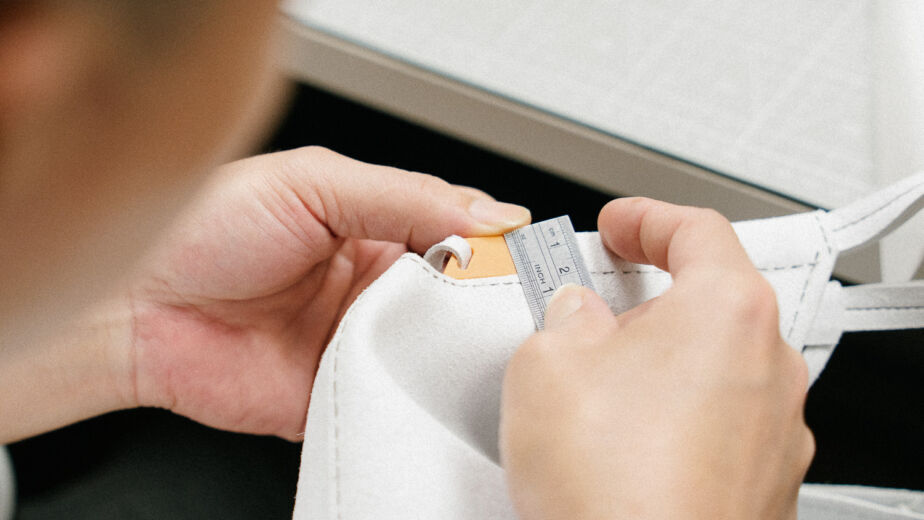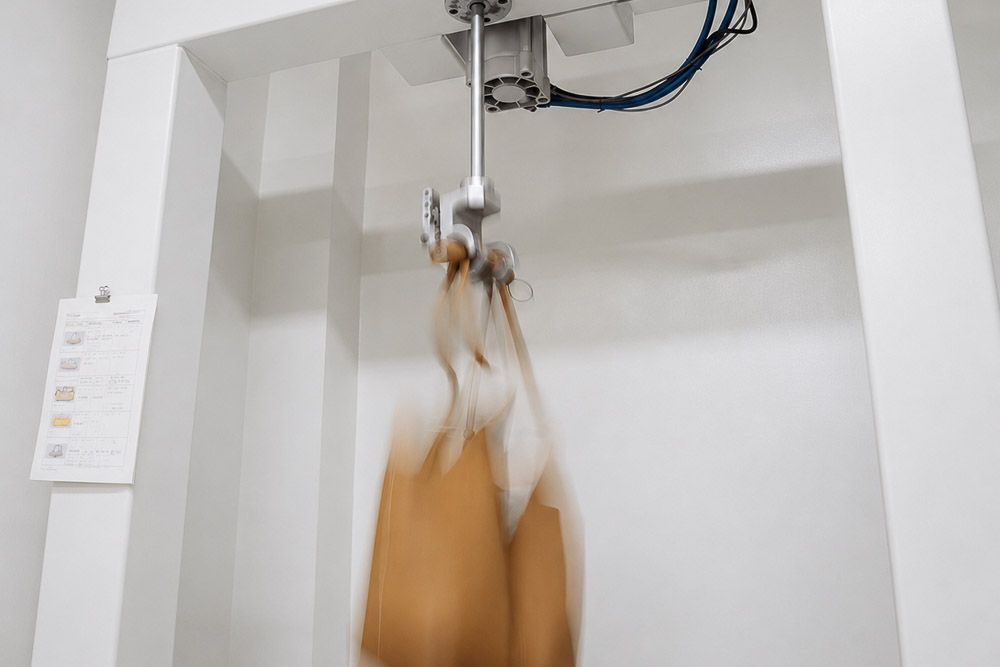
Bag durability testing uses relevant materials, components, attachments, or assembled products to investigate expected use. Start with likely loads, movement, friction, finishes, and failure risks—not a standard test list.
Start with use and likely failure
Before selecting a test, define:
- what the bag will carry and how loads enter handles, straps, seams, and body;
- how closures, adjustable parts, and moving components operate;
- where surfaces will rub against clothing, the user’s body, another component, or an external surface;
- which finishes or contact areas are sensitive;
- which deformation, loosening, tearing, wear, transfer, corrosion, or functional change is unacceptable.
A shoulder bag, structured tote, and travel bag create different load paths and contact conditions. Those conditions determine both the performance question and the specimen that can answer it.
Match the performance question to the test
Oscillation or dynamic loading can examine how a carrying system responds to repeated loaded movement, including change at handles, straps, attachments, hardware, or the bag body. Abrasion focuses on repeated friction and resulting wear, coating damage, fiber change, or exposure of an underlying layer.
Colorfastness asks whether color remains stable under the relevant contact or exposure condition. Salt-spray testing can investigate corrosion, discoloration, coating change, or functional loss in relevant metal hardware or finishes. HONG STUDIO can support these test families where they match the project question; they are not a mandatory package.
Choose a specimen that can answer the question
The specimen determines what the result can prove.
| Specimen | Suitable question |
|---|---|
| Material sample | Surface wear, color behavior, or other material-level performance before final construction |
| Hardware or component | Finish, movement, or component behavior without the full bag |
| Construction or attachment sample | Interaction among material, reinforcement, stitching, edge, adhesive, and hardware at a focused area |
| Development Sample or prototype | Performance of the assembled product direction, including load paths and component interaction |
| Production-intent configuration | Confirmation that the finalized material, component, construction, and product requirements support the intended decision |
A material result cannot prove handle-attachment strength, nor can isolated hardware prove how hardware, reinforcement, and bag body interact. Test at the level where the interaction exists.
Test when the relevant configuration exists
Material or component candidates may be screened before commitment. An assembled Development Sample can reveal interactions absent from isolated specimens. A production-intent configuration can be reviewed once material, hardware, structure, and construction are defined.
If a relevant variable changes—such as material specification, reinforcement, attachment, hardware finish, or construction—reconsider the affected question. The Research & Development page explains HONG STUDIO’s wider validation capability.
Turn a result into a product decision
A useful observation identifies where performance changed and which product decision should be reviewed.
Under dynamic loading, the first change may appear in the outer material, stitching, reinforcement, attachment geometry, hardware, or bag shape, each suggesting a different response. Abrasion may prompt a surface, backing, contact, or construction change; salt-spray findings may prompt review of hardware material, finish, specification, or exposure requirements.
The response should follow the finding. Movement at a strap attachment may point to attachment geometry or reinforcement; surface wear may point to material, backing, finish, or contact design; corrosion may point to hardware material, finish, specification, or exposure assumptions. The affected decision can then be revised and the relevant validation repeated where needed.
How does durability testing differ from production QC?
Durability testing asks whether a selected material, component, construction, or product configuration performs against a project-relevant question. Production quality control asks whether incoming materials, work in progress, and finished products conform to confirmed production requirements.
Testing helps define what production must preserve; production controls manage consistency against that basis. The Production page explains the downstream context.
Before testing, align the performance risk, specimen, review condition, and product decision the result must support.
Discuss your bag-development and validation requirements with HONG STUDIO