Handbag manufacturing is not simply the reproduction of a visible design. The silhouette must work with the internal structure, carry method, opening, materials, hardware, seams, and edges. A manufacturer has to preserve the intended appearance while resolving how the handbag stands, moves, opens, and carries in physical use.
Silhouette is a structural result
The same outline on a drawing can describe very different products. One handbag may need to drape softly when carried; another may need to stand independently, retain a sharp profile when empty, or change shape in a controlled way as it is filled.
Material alone does not create that behavior. Pattern geometry determines volume and where the body bends. Reinforcement supports selected areas, while lining and construction add further stiffness. If every panel is reinforced heavily, a soft handbag may lose its intended movement. If support is reduced too far, a defined base or upper edge may collapse.
The useful question is therefore not whether the bag is “structured” or “unstructured.” It is which areas should hold their shape, which should move, and how the material, reinforcement, pattern, and construction divide those roles. HONG STUDIO’s Research & Development capability includes feasibility, internal structure, reinforcement, pattern, and construction review.
Carry method changes silhouette and balance
Handles and straps are part of the handbag’s structure, not accessories added after the body is complete. Their position determines where the carried load enters the bag and how the body hangs beneath it.
For example, moving two handle attachments closer to the center may create the desired visual proportion when the bag is empty, yet pull the upper body inward when carried. Local reinforcement can support the attachment, but its extent must avoid making the whole upper panel unnaturally rigid. The decision connects handle placement, body pattern, reinforcement, and the intended carried silhouette.
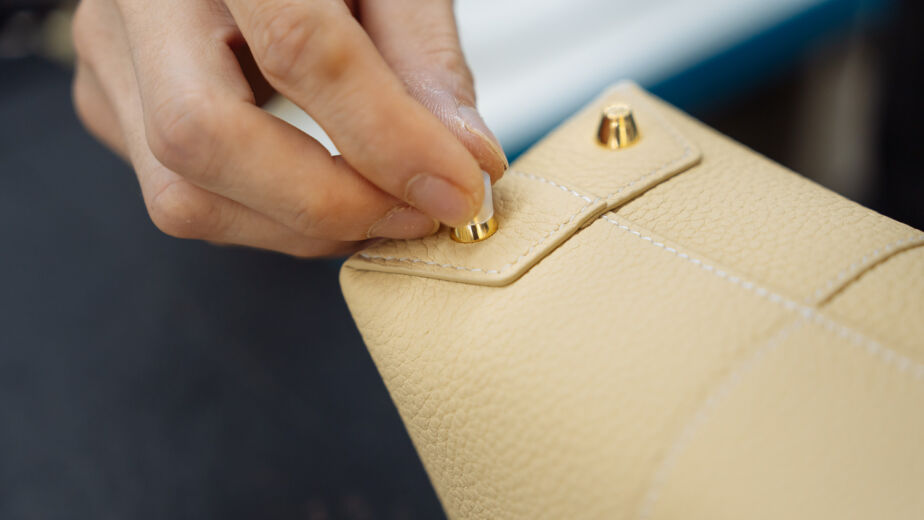
Hardware also affects balance through its position and movement. Its relationship to the handle or strap should be reviewed with the handbag carried, not approved only as a component on a table.
Opening and access shape the construction
An opening controls more than entry into the bag. Its width and position influence how the upper body holds its shape, where a closure can sit, how far the sides can spread, and whether the user can reach the interior comfortably.
A narrower opening may create a clean top line but make a wide interior difficult to access. Enlarging it may require new patterns or change the support around the top edge. A zipper, flap, frame, or other closure direction can also compete for space with lining, internal pockets, and reinforcement.
Assembly order matters because some closure parts or internal features become inaccessible after the exterior and lining are joined. A visually correct design may therefore need a construction change so the closure, lining, and pockets can be installed cleanly without distorting the opening. This is a distinctly physical problem that a flat specification may not fully reveal.
Review how the handbag behaves, not only how it looks
A handbag can appear correct while resting empty and behave differently in use. Physical review should include the states that matter to the design:
- empty and standing, where unwanted collapse or distortion is visible;
- filled, where volume, support, and opening access can change;
- held or worn, where balance, strap position, and carried silhouette become clear;
- opened and closed, where closure movement, lining, pockets, and hardware interact.
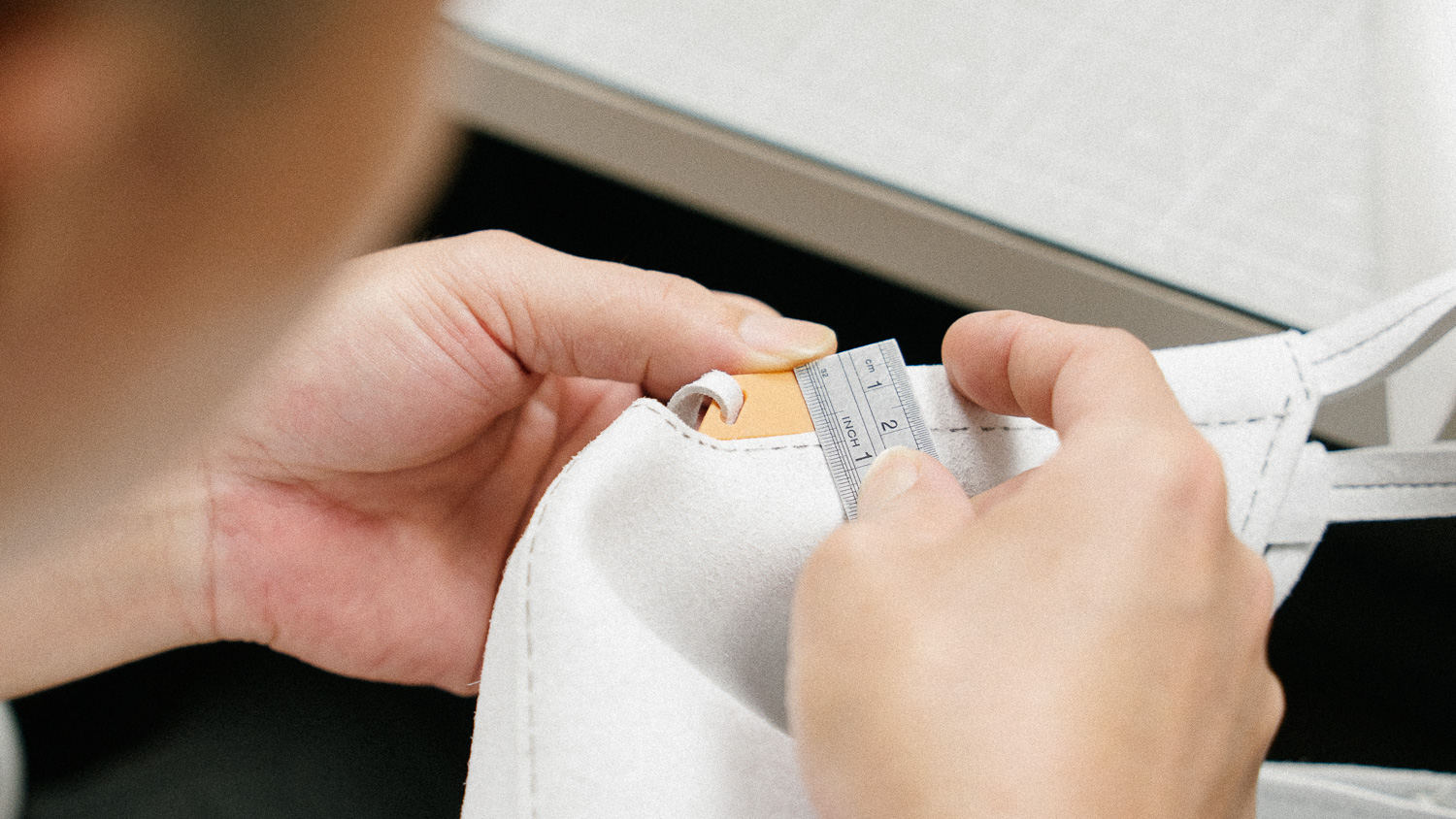
The review should also check seam and edge construction in those states. A folded or painted edge may look clean when static but sit differently where the handbag flexes or where several layers meet. The purpose is not to make every handbag rigid; it is to confirm that movement occurs where the design intends it.
From physical behavior to manufacturable requirements
Once the handbag behaves correctly, the approved result has to be expressed through the relevant patterns, materials, reinforcement, construction, hardware, finish, and physical reference. HONG STUDIO connects this development work with manufacturing in its own facilities; the Production page explains the wider production operation.
For a useful initial review, share the intended silhouette, how the handbag should behave empty and carried, its access and closure requirements, and the current design or physical reference.