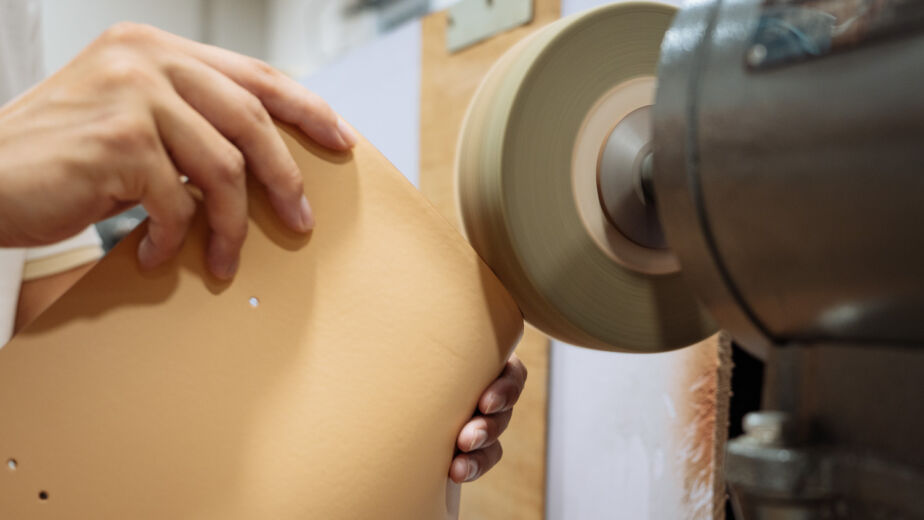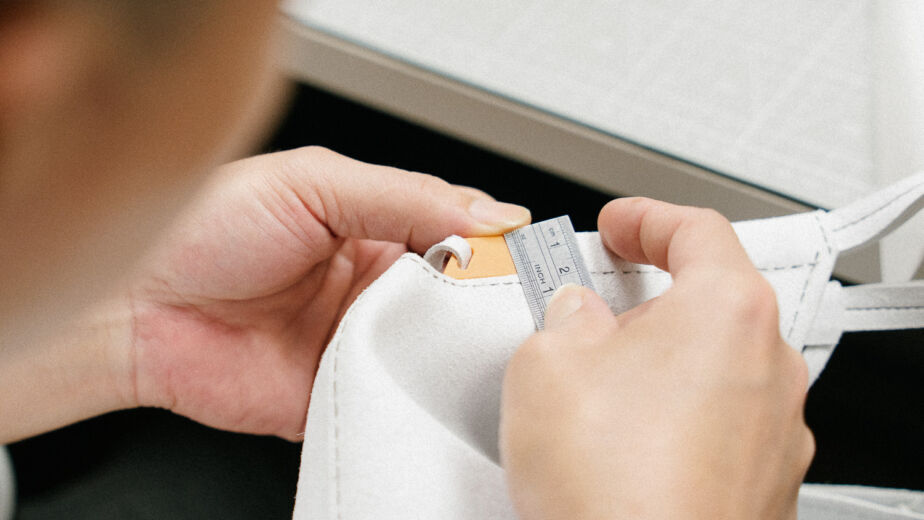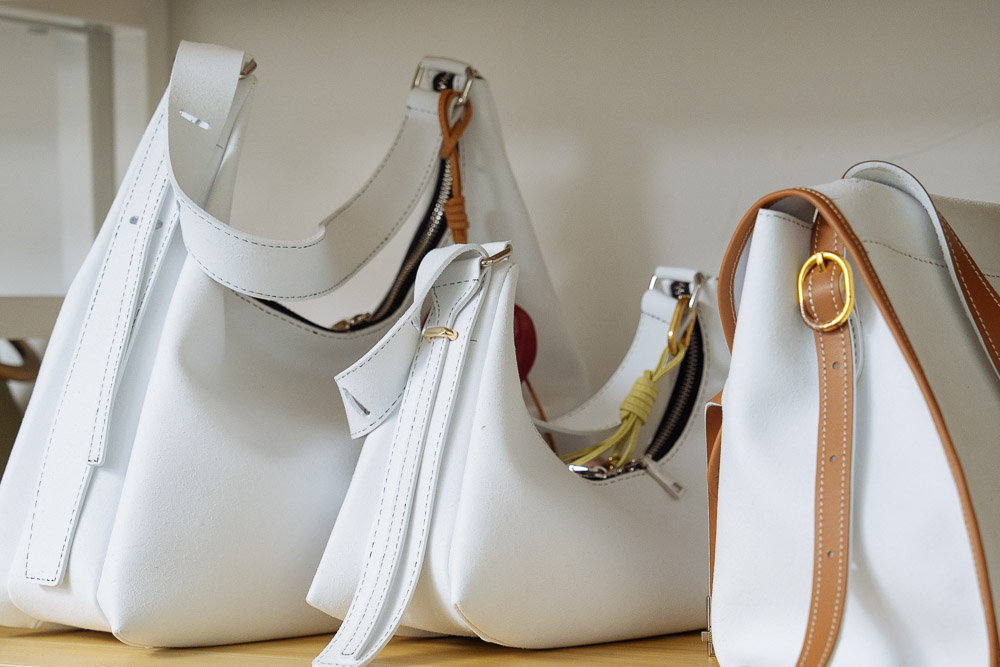
A bag prototype is a decision tool. Its value is not that it looks progressively more finished; its value is that it provides physical evidence about an unresolved product question. Before building, define what needs to be learned and choose a level of fidelity capable of answering it.
Give the prototype a defined question
One prototype does not need to prove everything. It may ask whether the proportion feels right, whether the opening gives practical access, whether the bag holds its intended shape, or whether a difficult construction can actually be assembled.
The question determines what the build must include. A volume study needs accurate dimensions and form but may not need final hardware. A carry study needs representative attachment positions and enough weight or contents to show how the bag hangs. A material-and-structure study needs materials close enough to the intended behavior to reveal drape, stiffness, and interaction.
Without a defined question, teams can spend time improving surface details while the main uncertainty remains untouched. A useful prototype makes the decision it supports explicit.
Use the simplest build that can produce valid evidence
A paper or cardboard mock-up can test proportion, volume, opening size, feature placement, and basic structural logic. It is fast because it leaves material behavior and finish out of the question.
A microfiber mock-up can move closer to sewn form and construction. It may help assess how panels join, how a shape develops in three dimensions, or whether an assembly direction is feasible. It still does not prove the final material, hardware, color, branding, or surface finish.
A more representative Development Sample is appropriate when the question depends on the intended material and component system or when the main product direction needs to be reviewed together. The principle is practical: do not use expensive final materials to answer a question cardboard can answer, and do not treat cardboard as evidence of final material behavior.
HONG STUDIO uses these tools within its wider Research & Development work, not as fixed stages every project must follow.
Physical evidence should change decisions
A prototype earns its place when what happens physically leads to a clearer decision.
An opening may match the drawing yet prove difficult to use once the sides resist spreading. The evidence may support widening the opening, changing its geometry, or adjusting the surrounding structure—not simply making another identical sample.
Reinforcement may preserve the intended profile but make a flexible area too stiff or create bulk at a fold. The next decision is then where support is actually needed and whether its extent or material should change.
Hardware may move through a path that conflicts with a nearby seam, pocket, or edge. The physical build reveals whether to reposition the component, change its movement clearance, or revise the surrounding construction.
These are evidence-led iterations. The point is not that revision always occurs, but that each build should either confirm a decision or expose a specific reason to change it.
Record what the build proved—and what it did not
Review should separate four things:
- accepted points supported by the build;
- decisions that remain provisional because the fidelity was insufficient;
- required changes and the version they affect;
- questions reserved for later material, performance, or production-intent validation.
This prevents a low-fidelity mock-up from being treated as approval of finish, hardware, or material behavior. It also prevents accepted geometry from being reopened without recognizing the effect on connected decisions.
HONG STUDIO associates comments, revisions, and approvals with the relevant project and sample version. The record can remain concise; it needs to make the physical evidence usable in the next decision.
When has the prototype done its job?
A prototype can progress when its assigned questions are sufficiently resolved, required changes are understood or incorporated, and the remaining provisional points are clearly identified. “Progress” does not mean the prototype has automatically become the final production reference.
Later work may still need to confirm final materials, hardware, colors, construction, variants, validation, and production information. The wider Project Pathways provide context for where prototype work sits without turning every physical build into the same sequence.
For an initial review, share the strongest current design input and state the question the next physical build must answer.