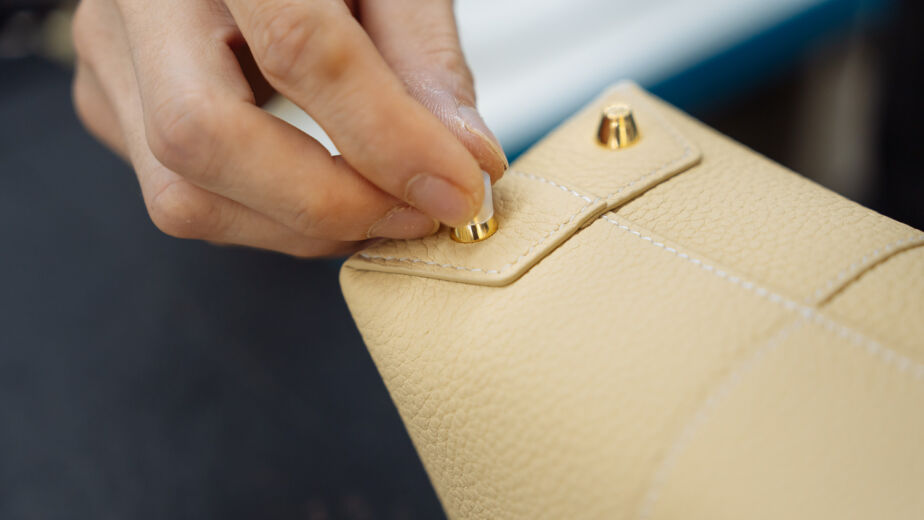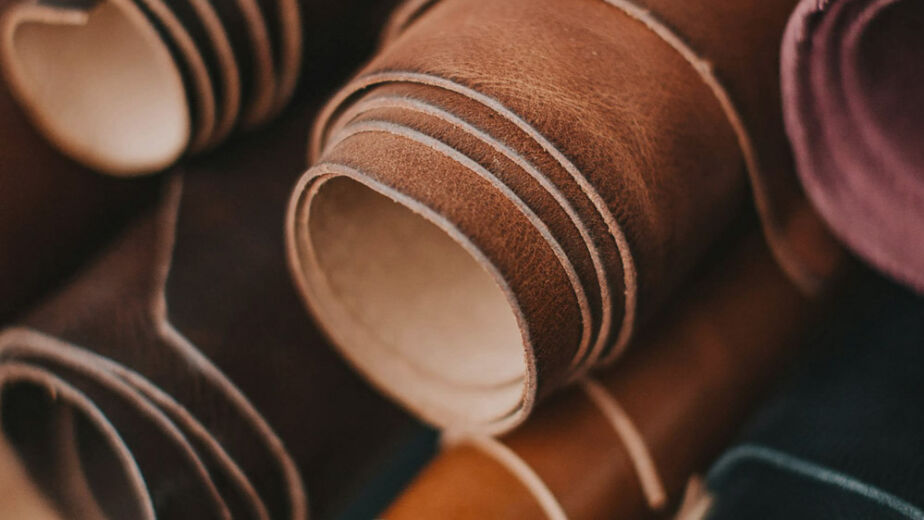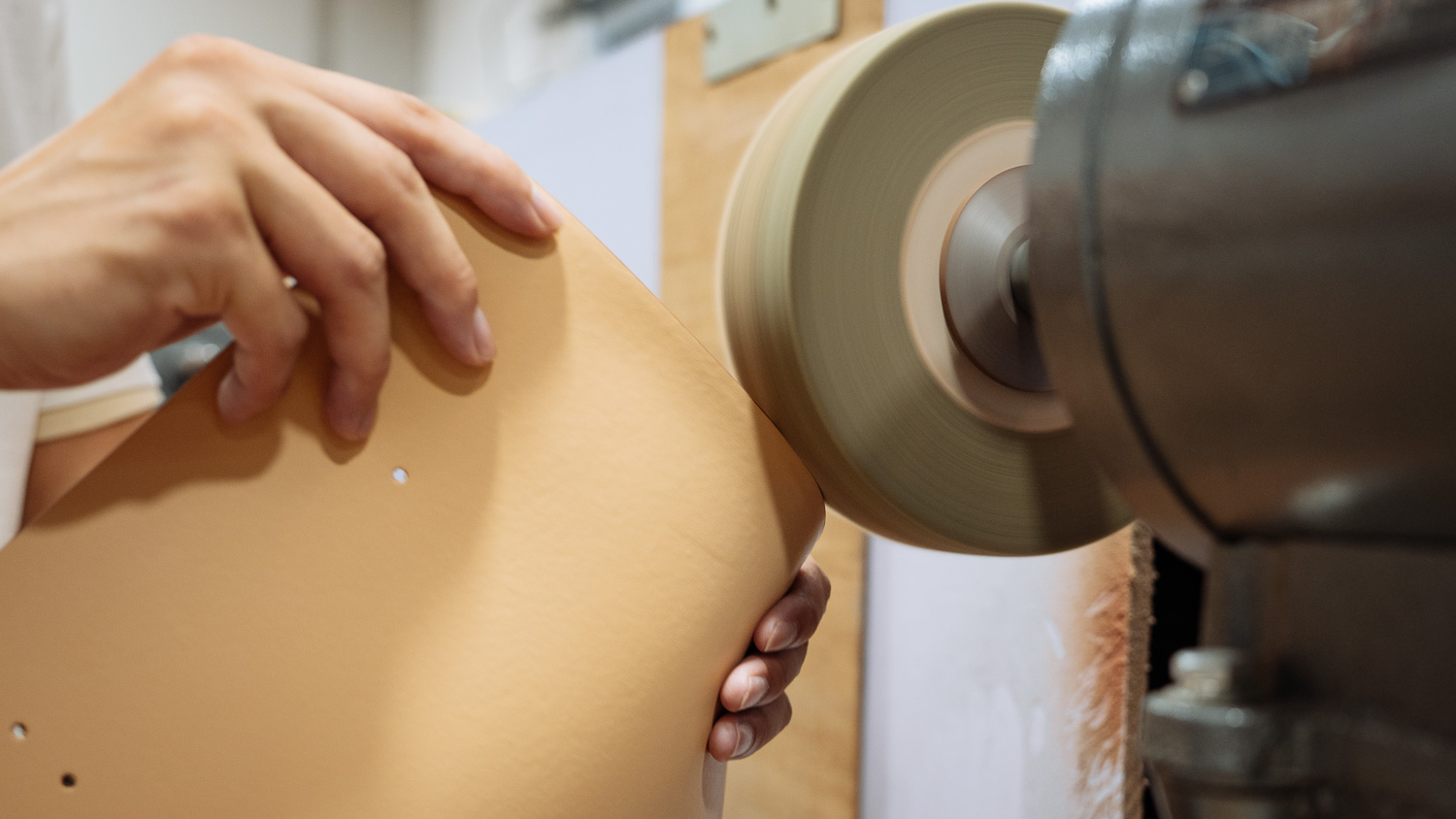
A capable bag manufacturer does more than make one acceptable sample. It turns the decisions behind that sample into repeatable material, pattern, construction, process, and quality requirements. The real test is not only whether the bag can be made, but whether the same intended product can be produced consistently beyond the sample room.
A successful sample proves possibility, not repeatability
A skilled sample maker can interpret a pattern, respond to material behavior, and manually compensate while building one piece. That judgment is valuable: it helps prove the design can work. It does not automatically prove that every important decision is clear enough for bulk production.
Consider a folded edge where the exterior material, reinforcement, and lining meet. On one sample, the maker may adjust the skiving by feel so the stack turns cleanly and the stitch line remains even. For production, the material thickness, skiving area, fold allowance, seam position, and operation sequence must be defined well enough for other operators to reproduce the result.
The same distinction applies to handle placement, hardware attachment, edge construction, and pattern alignment. A sample can look correct even when the method still depends too heavily on one person’s interpretation. Production readiness begins when those hidden decisions become transferable.
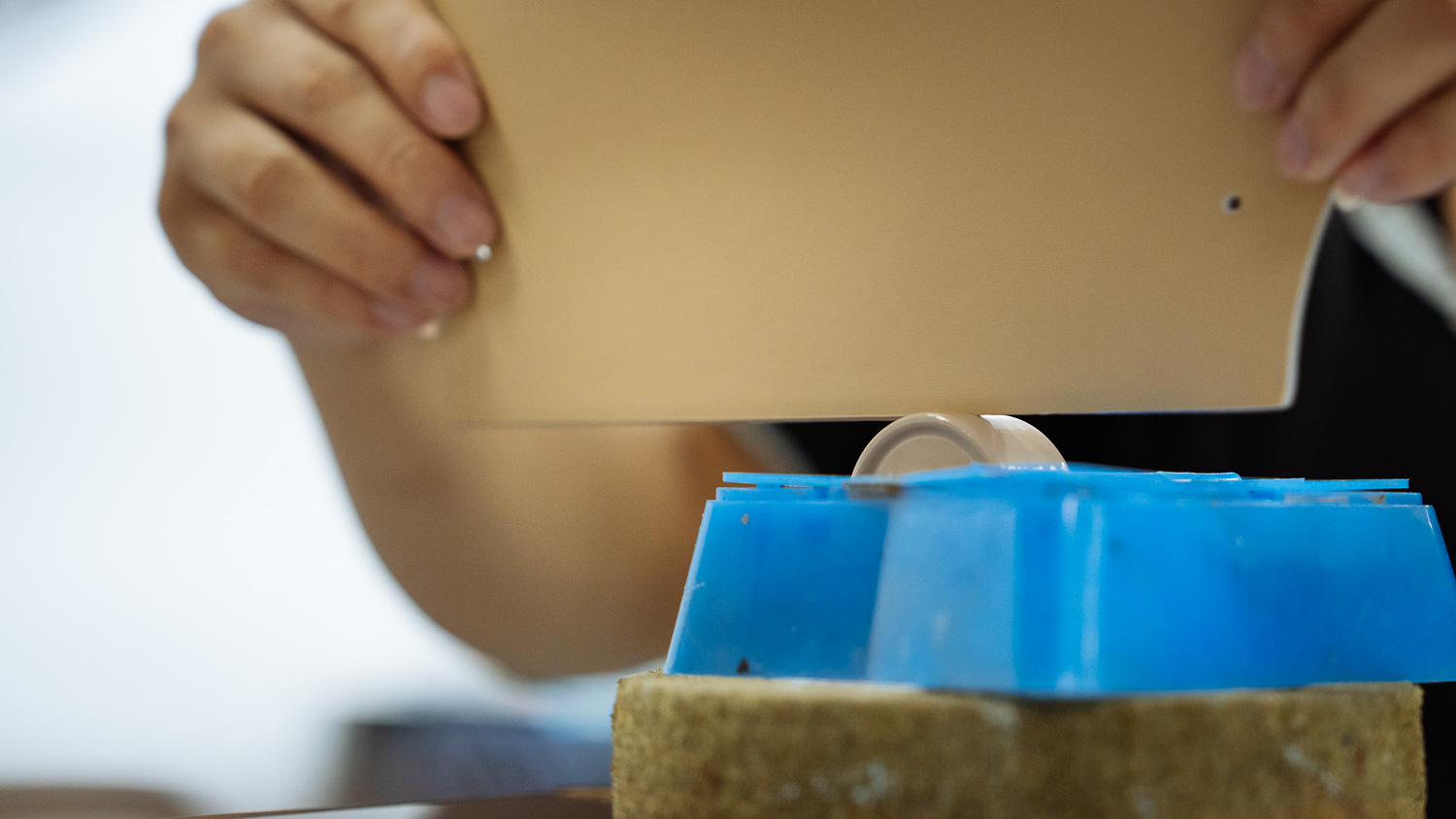
A bag is an interacting construction system
Bag components cannot always be changed independently. Improving one feature may create a new constraint elsewhere.
Adding reinforcement can improve shape retention or support a handle load, but it also increases the seam stack. That extra thickness may affect skiving, folding, stitching, turning, or edge painting. The solution is not simply “more reinforcement”; its material, extent, position, and relationship to the edge construction must work together.
Hardware creates another interaction. A heavier fitting may change the drape of a soft bag and increase the load around its attachment point. Preserving the appearance may therefore require a different backing construction, attachment method, or local reinforcement. The Research & Development page explains HONG STUDIO’s broader feasibility and structural work.
These interactions are why visual similarity is an incomplete manufacturing standard. The pattern, materials, internal structure, construction, and assembly sequence collectively determine whether the bag behaves and finishes as intended.
Production intent requires controlled decisions
As a project moves toward a Pre-Production Sample (PPS), provisional choices need to become production controls. The PPS should represent the finalized production-relevant product rather than merely the latest attractive sample.
The controls depend on the design, but usually include the approved physical reference, materials and hardware, structure, color and surface finish, critical dimensions, construction methods, and process requirements. Variants also need clear confirmation: a color change, for example, may involve a different material response or finish rather than a purely administrative SKU change.
Patterns and written specifications do not replace the physical reference, and the physical reference does not replace specifications. Used together, they reduce interpretation: the sample shows the approved result, while the supporting information identifies what must remain controlled to reproduce it.
For related detail on manufacturing after confirmation, see the Production page.
What separates a manufacturer from a sample maker
Skilled workmanship remains important in production. What distinguishes manufacturing capability is whether the approved construction can be communicated, repeated, and supported when production exposes a product or process issue.
HONG STUDIO connects development and engineering with owned production. When evaluating a manufacturer, ask which decisions were resolved and which references control the intended result beyond the first sample.