A private label bag manufacturer produces a product for the buyer’s brand, but “private label” is not a technical specification. One project may arrive with a validated production-intent bag; another may still need structural, material, hardware, or product development. The brand model identifies whose name the product carries—not how much work remains before manufacturing.
Private label does not define product maturity
Two visually similar private-label enquiries can require very different support. If the bag, materials, construction, and production references are already resolved, the remaining work may concentrate on validation and production preparation. If the input is an early concept or partially developed design, the manufacturer must first resolve the product itself.
This is why private label may overlap OEM Production for a mature product or ODM Development where engineering and industrialization remain. The distinction is practical: the manufacturer needs to know which decisions are already controlled and which still need development. HONG STUDIO’s OEM and ODM manufacturing page explains the broader relationship.
Branding must work with the bag construction
A brand element has a visual position, but that position exists on a physical component. Its size and location may interact with a seam, folded edge, pocket, reinforcement, curved panel, or hardware attachment. If it is moved after the pattern and assembly logic are fixed, the new location may be difficult to apply consistently or may interfere with construction.
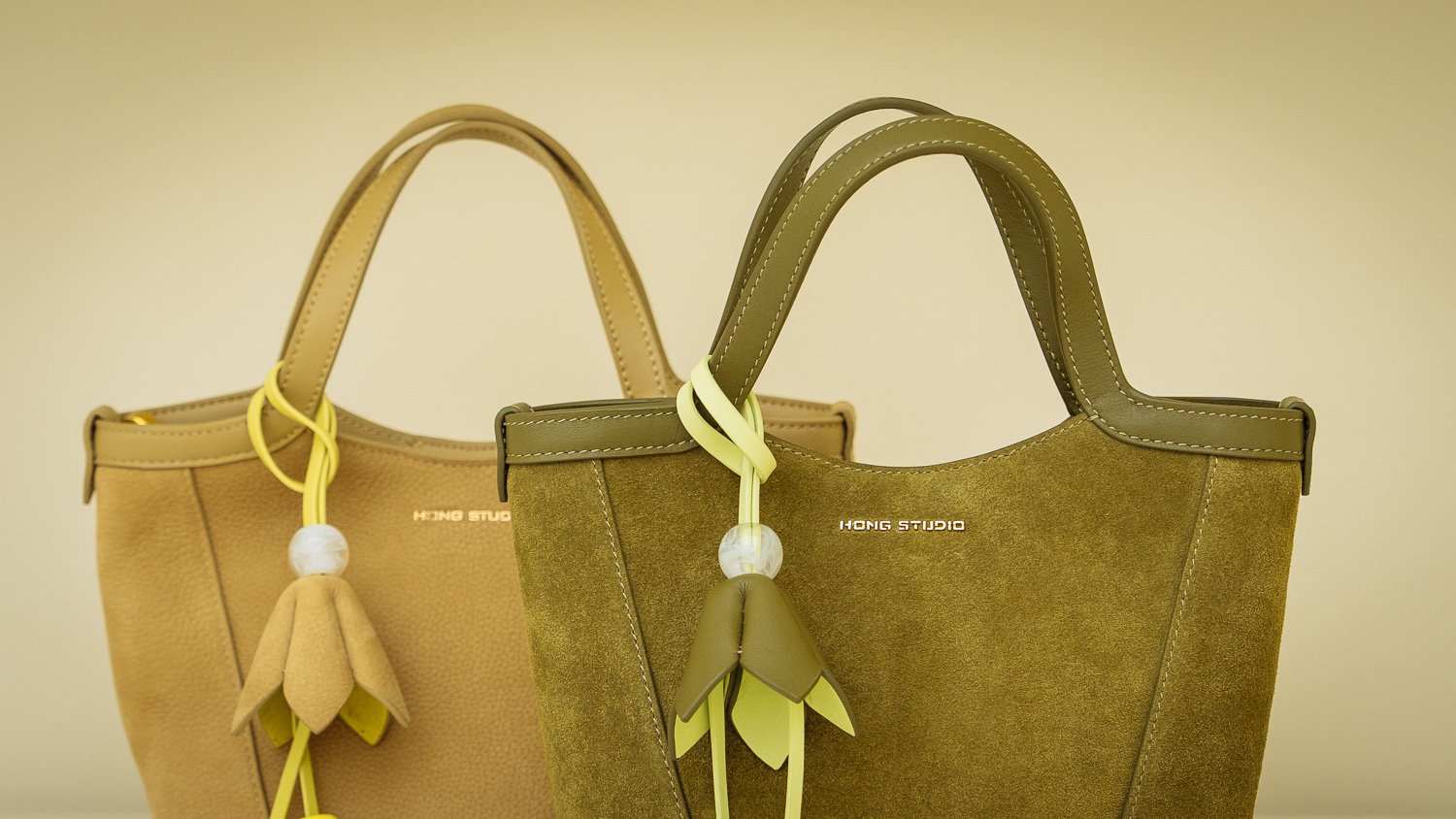
Material and surface finish matter as well. A brand detail approved on one material cannot simply be assumed to produce the same appearance on another material with different thickness, texture, firmness, or finish. Branded hardware goes further: its weight, shape, attachment, and required tooling can affect the surrounding reinforcement and the point at which it enters the assembly sequence.
The manufacturing principle is simple: approve branding on the intended product configuration, not as an isolated graphic. This article does not assume a particular branding method; the method and its production implications must be confirmed for the project.
The first branded sample is not the final objective
A branded sample can confirm appearance while still leaving repeatability questions open. Bulk production must hold the approved relationship between product shape, material and color, hardware, branding position, construction, and finish.
For example, a brand element centered correctly on a single soft panel may drift visually if the panel stretches during assembly or if its reference point is not tied clearly to the pattern and finished construction. The issue is not only operator care. The placement reference, material behavior, process timing, and acceptable finished appearance need to agree.
Variants create another control point. Different colors or materials may behave differently even when they share one design. Each approved variant should therefore be checked against the intended branding appearance and relevant production details rather than treated as an automatic color substitution.
Resolve the production-intent product before release
Before committing to production, the buyer and manufacturer should close the decisions that materially affect the branded product:
- brand-element method, size, and position;
- its relationship to seams, edges, pockets, reinforcement, and hardware;
- the intended result on each material, color, and surface finish;
- approved variants and the branding details that must remain consistent;
- the current Pre-Production Sample (PPS) and aligned production reference information.
The PPS is valuable because it brings product and brand decisions together in a production-intent reference. It should not be used to conceal unresolved choices: a late change to hardware, branding position, or material can reopen pattern, reinforcement, tooling, or assembly questions.
The Project Pathways page explains how HONG STUDIO routes projects by maturity.
Where HONG STUDIO fits
HONG STUDIO supports retail and private-label businesses with development and owned production matched to product maturity. See the Production page for the wider manufacturing context.
For an initial review, share the current product reference, the brand requirements already defined, the approved variants, and the decisions still open.