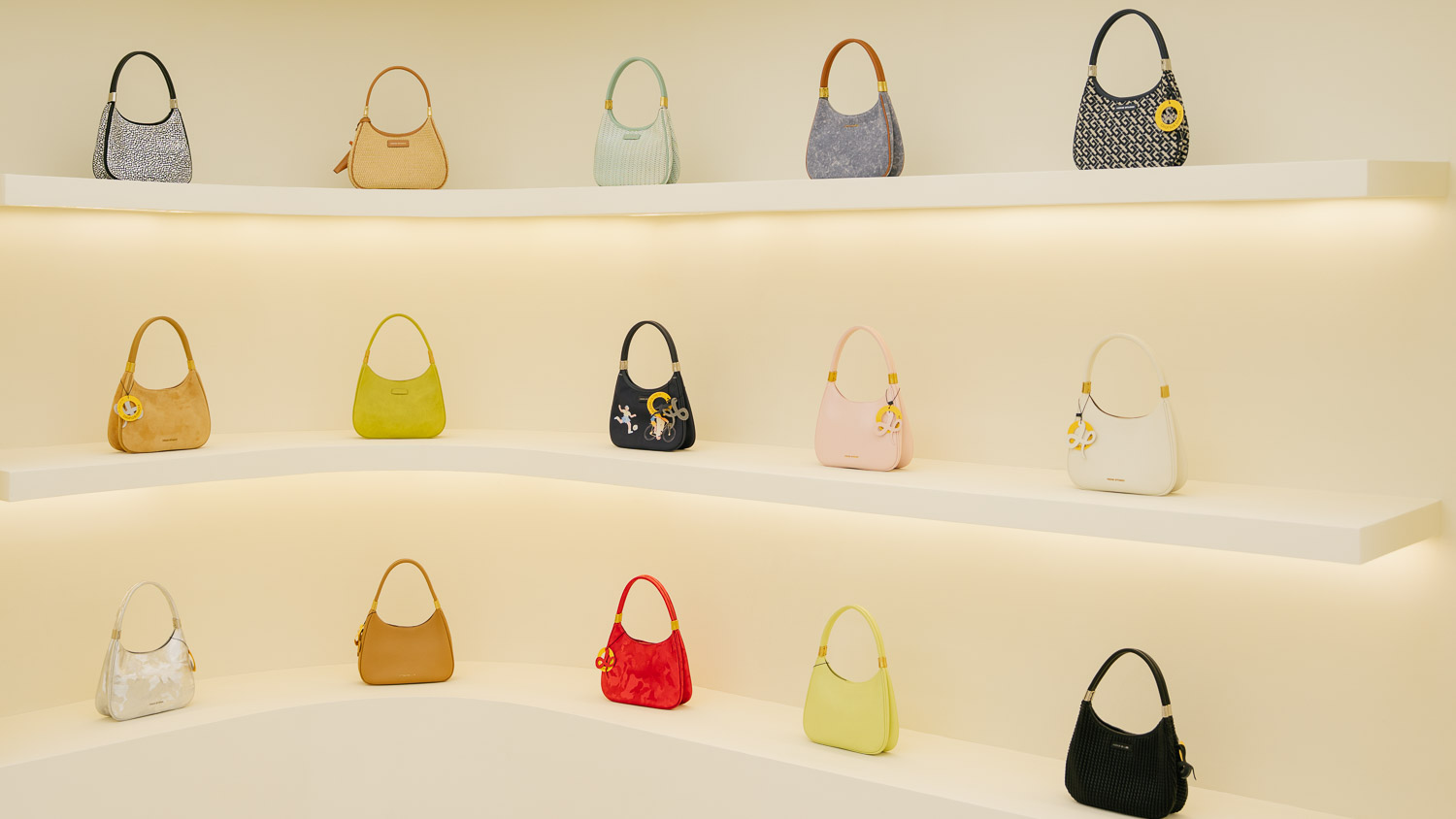
Start with the approved sample and identify what gives the bag its character in use: the curve it takes on the shoulder, the way the opening yields to the hand, or how the handle bends under load. The brand needs to identify those details, show how they should behave, and agree how production will be compared with the reference.
Repeatable production requires clear manufacturing controls. Design intent gives those controls a purpose: which outcomes must they protect?
Identify what would change the design’s identity
Start with the sample and ask: If this detail changed, would we still recognize and use the bag in the intended way? A particular top line, the softness of a handle, or the way a flap opens may matter more than its size suggests.
Consider an illustrative crescent shoulder bag. Its identity might depend on a relaxed upper curve when carried, a narrow-looking opening that still admits a hand comfortably, and a rounded handle that bends without feeling limp. These are design priorities, not three independent instructions to make the bag softer.
Reinforcing the entire upper body might improve its appearance on a table while removing the carried curve. Reducing support everywhere might restore softness while making the opening difficult to use. The brand should state which behavior must survive before the construction is adjusted.
Describe the result in a reviewable condition
Comments such as “keep the shape” leave too much interpretation. Identify the feature, the reference and the condition in which it matters.
| Design priority | Useful comparison | Decision it supports |
|---|---|---|
| Relaxed upper curve | Compare the approved and revised samples carried with the same representative contents | Has support changed the intended movement? |
| Clean flap line | Compare the closed flap from the same front and side views | Does the revised attachment or construction alter the visible line? |
| Comfortable rounded handle | Hold and bend the representative handle, then carry the bag | Has a construction change preserved both profile and feel? |
| Practical access | Open the bag and reach the intended interior areas | Does the opening still work without forcing the body out of shape? |
These are illustrative review prompts. Agree any measurements or acceptance limits for the actual product rather than assigning one tolerance to every detail.
Keep the priority attached to the production reference
The Pre-Production Sample (PPS) brings finalized production-relevant details together. Compare it with the accepted design priorities, including any deliberate refinements since the Development Sample.
If the crescent bag’s opening has changed, resolve whether the new result is an accepted improvement or a mismatch before confirmation. An attractive PPS should not silently replace an important earlier decision.
HONG STUDIO associates comments, revisions and approvals with the relevant project and sample version. Production information may include patterns, material and color references, construction requirements and confirmation records. A concise priority note alongside those references can explain why a detail matters without duplicating the technical file.
Review substitutions against the outcome they affect
A replacement material or fitting may look close in isolation yet change the product. A firmer leather may lift the upper curve; a heavier closure may pull the flap forward.
For a proposed substitution, ask which approved outcome could change and compare that outcome on a representative build. Record the accepted revision and update the affected references together. A component approval alone does not settle its effect on the assembled bag.
Check the same priorities during bulk production
Compare production with the current reference under the conditions used to define the priority. If the carried curve looks different, record that specific change rather than asking production to “improve the shape.” The finding gives the teams a focused product question to investigate.
If the curve has changed, compare the production bag and the approved PPS on the shoulder with the same contents. That gives the production team a specific difference to investigate while the affected work is still in progress.
Production quality control provides the wider conformity framework. The Shipping Sample, drawn from the actual bulk batch, offers a pre-shipment physical reference where applicable. It complements the earlier comparisons; the defining details need attention while the affected work can still be addressed.