A handbag feels premium when its leather, support, balance, hardware and finishing deliver a coherent experience in the hand. A soft shoulder bag and a structured top-handle bag can both achieve it. The useful question for a brand team is whether the sample’s responses match the intended character of the product.
Review it by picking it up, carrying it with representative contents, and opening it. Each action can expose a conflict hidden by an attractive photograph.
Touch the leather, then the assembled panel
Hand feel includes more than softness. Describe the surface touch, resistance to bending, body and recovery after gentle handling. Research on leather-handle assessment treats handle as a profile of sensory attributes, rather than a single softness judgment.
Compare the selected leather with the body, flap and handle on the sample. If the loose leather feels right but the finished panel feels board-like, ask to review the backing, reinforcement and layer build before replacing the exterior.
For an illustrative soft shoulder bag, a supple body paired with a rigid upper edge might interrupt the intended relaxed feel. The decision is where support is needed and where it should stop. “Use softer leather” may leave the actual cause untouched.
Feel whether support is in the right places
Structure should serve the intended behavior. A defined base can give a soft body a useful foundation; a flexible opening can make a structured bag easier to access.
Review the bag empty, filled and carried. Does the base support the intended contents? Does a supported area end in a noticeable hard ridge? Does the upper body move as intended, or resist the hand when opening?
The handbag construction determines these relationships. At sample review, identify where the response feels wrong before requesting a construction change.
Separate total weight from carrying balance
Pick up the empty sample, then add the same representative contents used for other versions. Note both the initial weight and where it is felt through the handle or strap.
Imagine comparing two versions of a small flap bag. The version with a heavier decorative closure may feel substantial on the table but tip forward when carried. Keeping that fitting may require a review of its position, attachment or surrounding support; selecting a lighter fitting may better preserve the intended balance.
State the objection precisely: “the closed bag tips forward” gives development a more useful question than “it feels too heavy.”
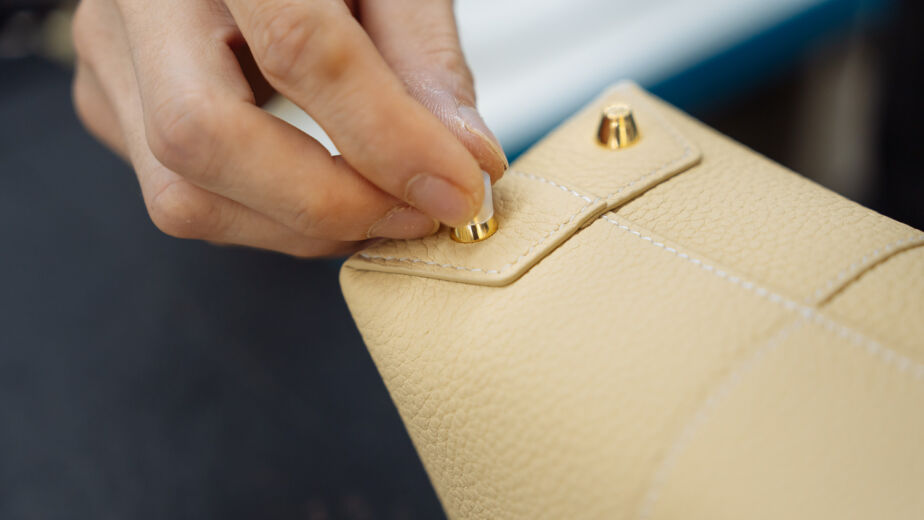
Operate hardware on the bag
Open and close the sample in its intended use position. Check whether the pull is comfortable to grasp, whether the closure aligns without forcing the body, and whether moving fittings contact the leather or one another awkwardly.
A zipper that moves smoothly as a loose component may feel resistant when installed around a tight opening. Ask whether the fitted path or surrounding construction needs review before specifying a different zipper.
Finish also contributes to coherence. Compare visible fittings together for the intended color and sheen, and feel the surfaces the hand actually touches. These observations help select a revision; a favorable first impression does not establish long-term durability.
Follow the hand into the interior
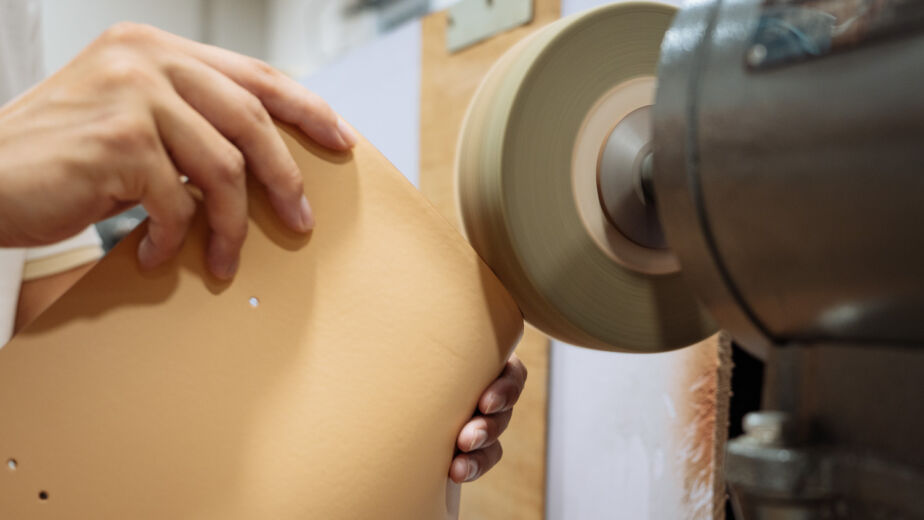
Touch the handle edges, opening, flap edge, zipper ends and lining. Look for abrupt thickness changes, rough contact points, bulky corners or lining that interferes with access. Stitching and edge finishing should support a clean transition where the hand moves.
An immaculate exterior can still feel awkward if a stiff opening presses against the hand or a lining fold catches the zipper. Review those points during normal use, then identify the affected construction rather than asking for a general finish upgrade.
Turn an impression into the next sample decision
Use a short sequence: action → observation → affected area → requested review. For example: “When opening the filled bag, the upper edge resists the hand; review local support while retaining the body shape.”
HONG STUDIO’s development and engineering work connects materials, reinforcement, internal structure, edge construction and physical sampling. A specific observation lets that work address the product experience the brand wants to improve.